
Consumers would soon have to shell out more to buy mobile phones, TV sets, cameras, laptops and other consumer electronic goods.

Between April 2 and July 8 this fiscal, the rupee has plummeted by 12.81 per cent, and hit all-time low of 61.21 per cent on Monday.

India's foreign exchange reserves dropped by $1.49 billion to reach $575.27 billion as of February 3, snapping a three-week rising trend, RBI data showed on Friday. In the previous reporting week, the overall reserves had jumped by $3.03 billion to $576.76 billion. In October 2021, the country's forex kitty had reached an all-time high of $645 billion.

Some experts, however, see a silver lining in the fall and said the volatility has come down sharply and that bodes well for the Indian currency

The reason for the stickiness in bond yields can be many, but the most responsible is the liquidity deficit stance taken by RBI, says Anup Roy.

Increased demand for the American unit from importers and banks, affecting the value of the rupee

Sharp fall in domestic stock market also affected the rupee sentiment.

The Indian benchmark S&P BSE Sensex today eased by 14.59 points, or 0.05 per cent after touching its all-time intra-day peak.

The employment situation remains dire. Whatever can be done to promote greater low-skill employment should be pursued aggressively, advises former chief economic adviser Shankar Acharya.

The gains, they say, would not be sustained, and too much volatility in exchange rates does not benefit them.

Indian investments in equity and debt account for the second-highest remittances outgo (about a quarter).
India's forex reserves dropped by $5.681 billion to $561.267 billion for the week ended February 17, the RBI said on Friday. This is the third consecutive week of a drop in the reserves after the $8.319 billion decrease in the previous reporting week to $566.948 billion. In October 2021, the country's forex kitty had reached an all-time high of $645 billion.
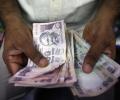
A gradual weakening of the rupee, however, may add to inflationary pressures.

The fall was led by banking stocks, with IndusInd Bank, Kotak Bank, Federal Bank, Axis Bank, ICICI Bank, HDFC Bank and SBI declining up to 2.36 per cent.

India's forex reserves dropped by $8.32 billion to $566.95 billion for the week ended February 10, the RBI said on Friday. This is the second consecutive week of drop in the reserves after the $1.49-billion decrease in the previous reporting week. It can be noted that in October 2021, the country's forex kitty had reached an all-time high of $645 billion.
.jpg)
Narrowing of the current account deficit will help arrest depreciation of the rupee and ease inflation concerns, industry groups said.
The Indian rupee dropped by 58 paise to a lifetime low of Rs 52.73 per US dollar in early trade on Tuesday on persistent demand for the American currency from banks and importers amid sustained foreign capital outflows from the equity market.

Jet fuel or ATF prices were on Thursday were cut by a steep 4.5 per cent, the first reduction in rates in six months.

Benchmark interest rate hiked by 50 basis points to 3-year high at 5.90 per cent. Economic growth projection for FY23 cut to 7% from 7.2% estimated in August. GDP expected to grow at 6.3% in September quarter, 4.6% each in December and March quarters.

All nine Adani stocks saw a rise in their share price in H1FY23, ranging from 6.1% in case of Adani Ports to 102% in case of Adani Power.
India's forex reserves declined by $1.27 billion to $561.58 billion for the week ended January 6, the Reserve Bank said on Friday. The overall reserves had increased by $44 million to $562.85 billion in the previous reporting week after two consecutive weeks of the slide. In October 2021, the country's foreign exchange kitty reached an all-time high of $645 billion.

Dollar weakness was a major contributor to the rupee recovery as the skittish investors continued to lighten their long positions.

After sinking 586 points during the day, the 30-share index ended 503.62 points, or 1.29 per cent, lower at 38,593.52. The broader NSE Nifty plunged 148 points, or 1.28 per cent, to 11,440.20.
.jpg)
BMW Group India is announcing a price increase of up to 5 per cent across the BMW and Mini product range effective August 15, 2013, according to a company statement.

'A stable and strong Pakistan with an anti-India mindset and hatred is not good for us.'
Finance Minister P Chidambaram on Monday said the currency will find its level as steps being taken by the government to contain fiscal and current account deficits will improve investor sentiments.

Wipro was the biggest loser in the Sensex pack, slipping nearly 2 per cent, followed by IndusInd Bank, State Bank of India, Kotak Mahindra Bank, ICICI Bank, HDFC Bank, Infosys, Tata Consultancy Services, HDFC and Bajaj Finserv. On the other hand, Nestle, Mahindra & Mahindra, ITC, HCL Technologies, Asian Paints and Maruti were among the gainers.

The upward revision in growth forecast for current fiscal comes in the backdrop of GDP expanding 8.2 per cent in April-June quarter, higher than Fitch's expectation of 7.7 per cent.
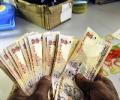
Of the 70 international feeder funds, more than half have made losses in 2014.

India's forex reserves increased by $3.034 billion to $576.76 billion as of January 27, making it the third consecutive week of a jump in the kitty. The overall reserves had risen by $1.727 billion to $573.727 billion in the previous reporting week. It can be noted that in October 2021, the country's forex kitty had reached an all-time high of $645 billion.

The depreciating rupee against dollar has a short-term benefit for the IT industry and the sector should not depend on currency management for profits, a top functionary of industry body Nasscom said.
The rupee had depreciated against the dollar in the last quarter after continually appreciating for the past three quarters, this reversal is likely to help the revenue growth this quarter, domestic brokerage Sharekhan said in its IT earnings preview. The rupee had depreciated against the dollar in the last quarter after continually appreciating for the past three quarters, this reversal is likely to help the revenue growth this quarter.

To make space for the extra row, Vistara has opted for the smartLav concept offered by Airbus

It is high time to manoeuvre the rupee more effectively and predictably, even as it has to be recognised that such tweaking of the rupee needs to be accompanied by reforms to the real sector and factor markets.

The rupee fell to more than one-month low of 65.75 against the US dollar on Thursday.

RBI is expected to cut policy rates by 50 basis points by 2016.

Fresh foreign capital outflows also affected the rupee sentiment, a forex dealer said.

'Valuations are very attractive, and most companies are cash-rich with strong dividend yields.'

The Rupee is expected to weaken further against the dollar.
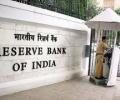
The rupee has not depreciated enough against other currencies.
